Quick Links
In any business where goods are sold, efficient valuation of inventory is essential to reflect the overall expense it takes to replenish stock at the current market value. Understanding the movement of inventory plays a pivotal role in business operations, and NIFO (Next In, First Out) is a powerful internal system that supports cost planning and decision-making. Within this guide, we explore what NIFO means, how it can be applied, and its relationship with warehouse operations and storage racking systems.

What Does NIFO Mean?
Although NIFO is not recognised under the guidelines set by GAAP (Generally Accepted Accounting Principles), it is often used internally by management teams to gather strategic insights. Unlike other methods such as FIFO (First In, First Out) or LIFO (Last In, First Out), which are fundamental in the physical movement and accounting of stock, NIFO is merely used for forecasting and decision-making, rather than formal reporting.
Where Is NIFO Applied?
NIFO is primarily used as a theoretical method for internal expenses, particularly in environments where supply pricing is unstable or demand is time-sensitive. It is useful in preparing for rising costs and assessing impact on infrastructure or margins.
Applications of NIFO include:
Product Forecasting
Estimating how future purchase prices may affect stock value and resale.
Manufacturing
Understand the projected cost of raw materials and components.
Procurement
Backing up bulk purchase decisions or identifying trends in the market.
Sectors where NIFO is useful:
Retail
Where stock changes frequently and the demand for new inventory can fluctuate.
Construction and Manufacturing
Raw materials such as timber and steel can be subject to global price changes.
Warehousing
Rapid turnover means that it’s essential to understand future costs during stock procurement.
While not officially recognised in financial reports, NIFO helps support strategies where pricing trends can be unpredictable.
How Does NIFO Apply to Warehouse Operations?
Although NIFO is not a physical method, its principles still influence how warehouse operations are planned. For example, developing a deep understanding of how replacement inventory costs are rising can assist in making the decision to increase buffer stock. Likewise, it can prompt businesses to adjust turnover speed or timings, which all affect storage and fulfilment.
Although warehouses will typically use the LIFO and FIFO methods, the just-in-time (JIT) or real-time fulfilment models can follow similar logic as that of NIFO. For example, goods that arrive quickly are dispatched or allocated to zones depending on demand, and the following stock to come in is often the next to go. In these cases, warehouse and supply chains can benefit from understanding NIFO logic, even if it isn’t explicitly applied to racking or pick systems.
Adjusting NIFO Techniques to Storage Racking
While NIFO does not directly dictate how goods are stored, understanding the different types of racking systems is important when streamlining operational flow and cost control strategies.
Types of racking systems:
FIFO (First In, First Out)
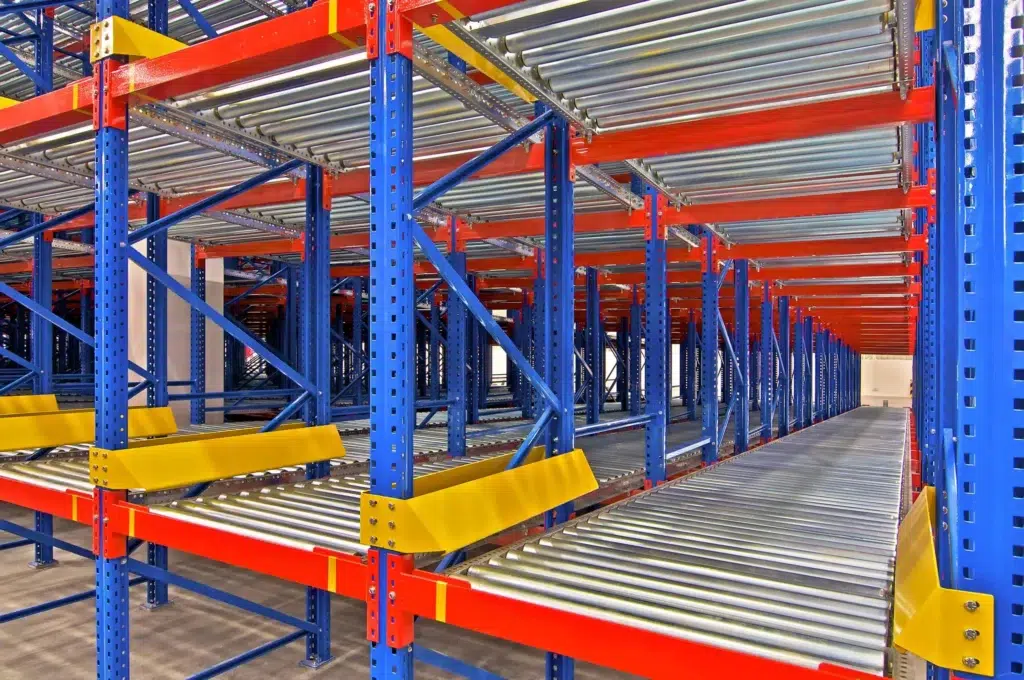
Live pallet racking and carton flow racking use gravity or rollers to push older stock to the front, which is ideal for perishables or date-sensitive goods.
LIFO (Last In, First Out)
Push-back racking and drive-in racking store newer stock at the front, which is then picked first. This is especially useful for bulk inventory with a lower turnover rate.
High-Turnover Racking
Solutions such as double-deep racking provide rapid access to individual units and support fast-moving inventory in retail or fulfilment centres.
While no system is directly built for NIFO, since it’s designed around future inventory, forecasting can still inform how goods are arranged, when to restock, and how to allocate or organise space efficiently.
NIFO is a powerful tool for understanding the real cost of replenishing inventory, especially in uncertain markets, playing an important role in financial planning and stock strategy for more agile and well-informed decisions.

Optimise Operations with NIFO-Compatible Racking Systems
At Prodek, we have spent over 30 years designing, installing, and maintaining high-quality, compliance-approved racking systems tailored to your operational strategy, including NIFO principles. From initial site audit to ongoing aftercare from our SEMA-approved instructors, our team is committed to delivering systems that maximise efficiency and workflow.
We provide a vast range of solutions, accommodating both FIFO and LIFO, specialised equipment, mezzanine flooring, and full project management. To discover more about how we can transform your business logistics, enquire with our experts at Prodek today.