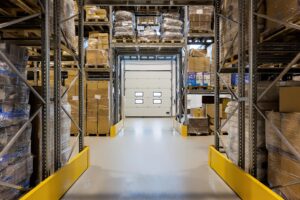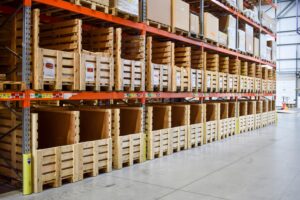
When warehouse throughput increases, it’s never long before the whole the floor is taken over with stock. No matter how large your warehouse may be, horizontal space has its limits. However, some businesses may not realise that vertical space could hold the key to their spatial restrictions. When you need to get stock off the floor, it’s usually the time to redefine how space is utilised. Specialist pallet racking for warehouses is the best way to boost storage potential.
A warehouse racking system is often ordered from the same company that supplies the forklift trucks. The ease of this alone may appeal. However, when every warehouse needs to deliver maximum revenue per square metre, does the forklift truck supplier have the expertise to fully maximise the potential of your warehouse? When distribution challenges come thick and fast, the best pallet racking for warehouses is future proofed for years to come.
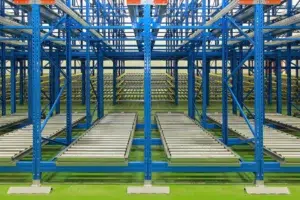
If you have just moved into a new warehouse that needs fitting out with the right storage, it makes sense to install racking that supports the most efficient distribution practices, from the outset. There are different types of pallet racking for warehouses designed to suit different stock types and distribution methods. For instance, double deep pallet racking is well suited to stock lines on a slow rotation. For rapidly rotating stock lines, live pallet storage – also known as FIFO or First in First Out – is a highly effective pallet storage system with fast handling times.
When setting up a warehouse racking system, it is important to determine whether your racking supplier has the breadth of range and knowledge to supply and install the optimum racking solution. To get the most out of your racking fit-out, make sure it can adapt to any challenge your supply chains or customers might throw at it.
Why Use Vertical Space?
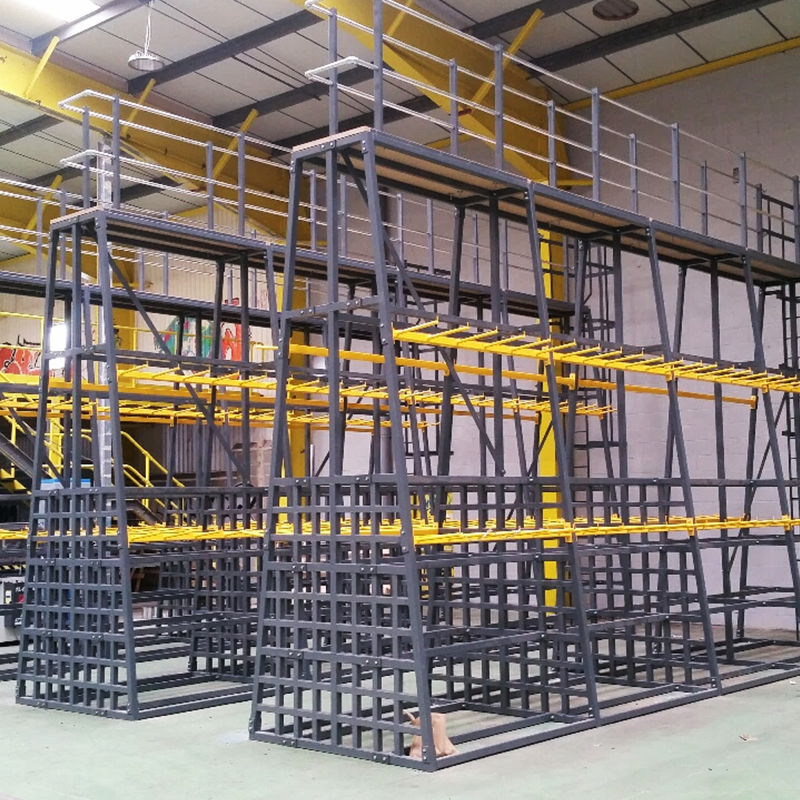
In many cases, people look at horizontal space first without thinking about the vertical storage capacity of their warehouse. When you are planning to fully utilise vertical space, you also need to consider lifting equipment. Pallet racking needs to provide enough room for forklift trucks, but without wasting a single centimetre of potential storage space. Poor design can waste significant volumes of capacity with each aisle installed.
Most pallet racking installations are configured with an aisle width of 2.5 to 4 metres. However, specialist narrow aisle pallet racking reduces this to an aisle width of 1.6 metres. Specialist racking needs specialist lifting equipment. Narrow aisle is usually suited to equipment with an articulated mast, running on guide rails.
Opting for a vertical storage solution can also improve efficiency and productivity. A well-conceived racking system, designed to fulfil the individual requirements of the business, will support seamless stock handling and order fulfilment.
Maximising your vertical space with pallet racking systems will also ensure there is little need for you to move premises or rent additional storage space. If you have used all of your floor space, it’s time to build upwards.
Heavy Duty Warehouse Racking
Some warehouse managers are tasked with handling and storing big, awkward, heavy goods. It is this kind of stock which encroaches on the safe working practices every warehouse must enforce. When you have expert storage engineers on site, they will spot every opportunity to first, maximise your capacity, and second, build the most efficient system to manage your stock lines.
Your warehouse racking system must work for you, your supply chain, and your customers. Handling heavy duty goods needs heavy duty warehouse racking. This type of racking has to be robust. Avoid any racking that is not manufactured using hot rolled steel sections. The best heavy duty racking should be able to store loads over 10,000kgs per level.
Heavy duty warehouse racking should also offer the opportunity to add frames and beams, as storage requirements develop. Look for accessories to ensure your racking is as safe and effective as possible. Anti-collapse mesh, support bars and guarding should all be considered at the design phase.
An initial site consultation will determine the optimum warehouse racking system for your operations. This process will maximise capacity and ensure stock handling is safe and efficient. Future-proofing your warehouse is important, you never know when you may need to expand.
Set Up a Consultation
Whether you are setting up a new warehouse operation or considering a rethink of the warehouse layout, Prodek have the expertise to design and install the perfect fit. We provide full surveys and risk assessments, with layout drawings, to demonstrate how our heavy duty racks can transform warehouse optimisation.
Contact our team now to arrange a site consultation.
Have you had your annual Rack Inspection? Prodek offer a professional rack inspection service to ensure storage systems are compliant with Provision and Use of Workplace Equipment Regulations’ (PUWER) and The Health & Safety at Work Act 1974.