Pallets are a staple in distribution and warehouse operations when it comes to transporting and carrying loads. They provide a rigid platform that facilitates operations and can be easily used with forklifts or pallet jacks.
Many types of pallets are available to meet different dimensions, entry points, and materials. Prodek is an expert at delivering pallet racking systems and has extensive knowledge of different industries and pallet solutions. We discuss the different types of pallets and their uses in detail.
Who are the ISO?
The International Organisation for Standardisation (ISO) is a global company that publishes standards used worldwide. Six ISO pallet sizes cater to countries around the world. Knowledge of these sizes is necessary for international trade and the differing pallet requirements of the country exported to. The six standard dimensions set by the ISO are as follows:
- 1016 x 1219 mm – North America
- 1000 x 1200 mm – Europe, Asia, similar to 48” x 40”
- 1165 x 1165 mm – Australia
- 1067 x 1067 mm – North America, Europe, Asia
- 1100 x 1100 mm – Asia
- 800 x 1200 mm – Europe
Pallets Manufactured by Material
Wood Pallets
Wooden pallets are the most common material type, used across a spectrum of logistics.
- Made from various woods such as fir, pine or oak in differing dimensions.
- Can withstand heavy loads, supporting up to 4,000kg.
- Easily recyclable and can be used for other resources, making them an environmentally sustainable option.
- Efficient choice and used across a vast market, but can be subject to damage and a short lifespan.
Metal Pallet
Used commonly within the metal industry due to their robust nature, metal pallets are useful for businesses where heavy materials are used daily.
- Made from aluminium or steel to provide strength and durability in demanding industries.
- Metal pallets are fire-resistant and capable of handling weather elements, making them ideal for indoor and outdoor use.
- Metal pallets can be melted down and re-used, contributing towards sustainable practices.
- Because of their weight, metal pallets are not ideal for every industry.
Plastic Pallet
Plastic pallets provide a middle ground between wooden and metal pallets, offering more lightweight durability.
- Plastic pallets are made from either Polypropylene (PP) or High-Density Polyethylene (HDPE).
- Ensure longevity, with the capability to handle loads up to 5,000kg.
- Resistant to weather elements and moisture, their lightweight design makes them easier to handle and store.
- Often made from partial or fully recycled material available in various sizes.
Cardboard Pallet
Cardboard pallets are designed for lighter loads, preferential for the food industry and transportation practicality.
- Cardboard pallets are inexpensive and lightweight options for handling goods.
- Designed to be recycled, cardboard pallets are sustainable.
- Cardboard pallets generally are single-use, resulting in a short life cycle.

Pallets Based on Dimensions
Pallets follow dimensions based on their international standards; it is essential knowledge when exporting goods overseas.
EPAL Euro Pallet
The most commonly used dimension across Europe is 1200 x 800 mm. This also fits the standardisations set by the ISO.
American Pallet
The standard dimension for American pallets is 1200 x 1000 mm, similar to 48 x 40 inches. This size is not only standard for North America, but many other countries including the UK.
Alternatively, North America uses pallet dimensions of 1016 x 1219 mm.
Pallet materials and dimensions are subject to industry-specific specifications. Considerations vary, such as the number of entry ports required for forklifts and whether a reversible, closed and winged pallet is beneficial.
Pallet Racking Solutions
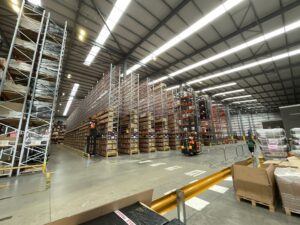
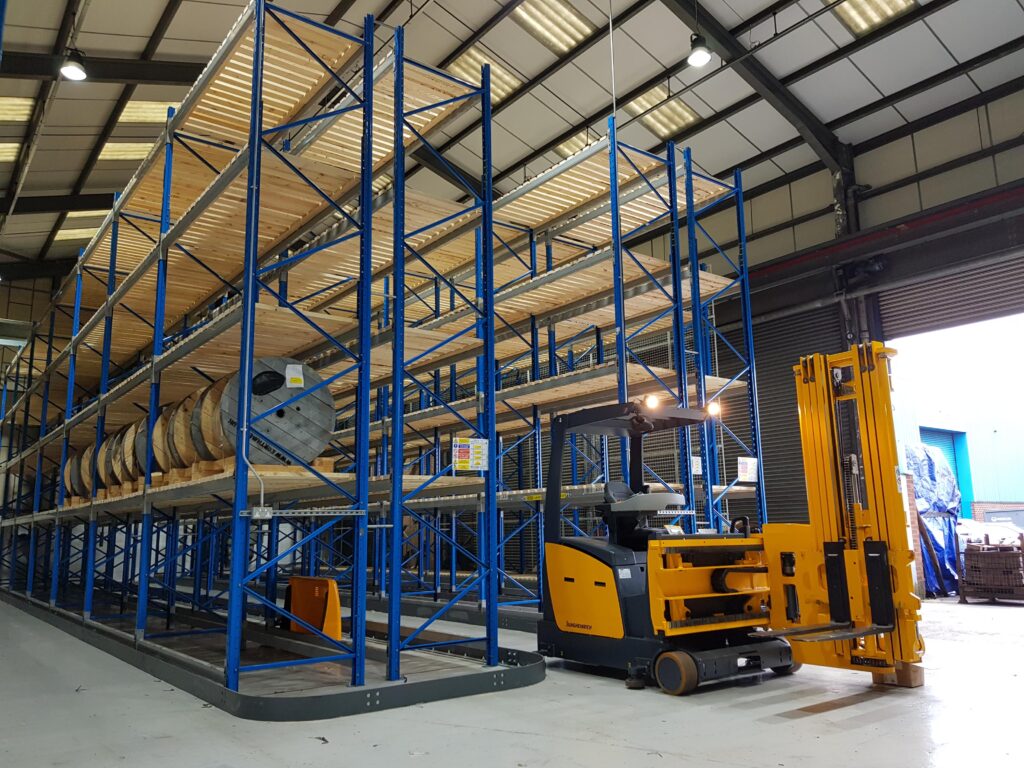
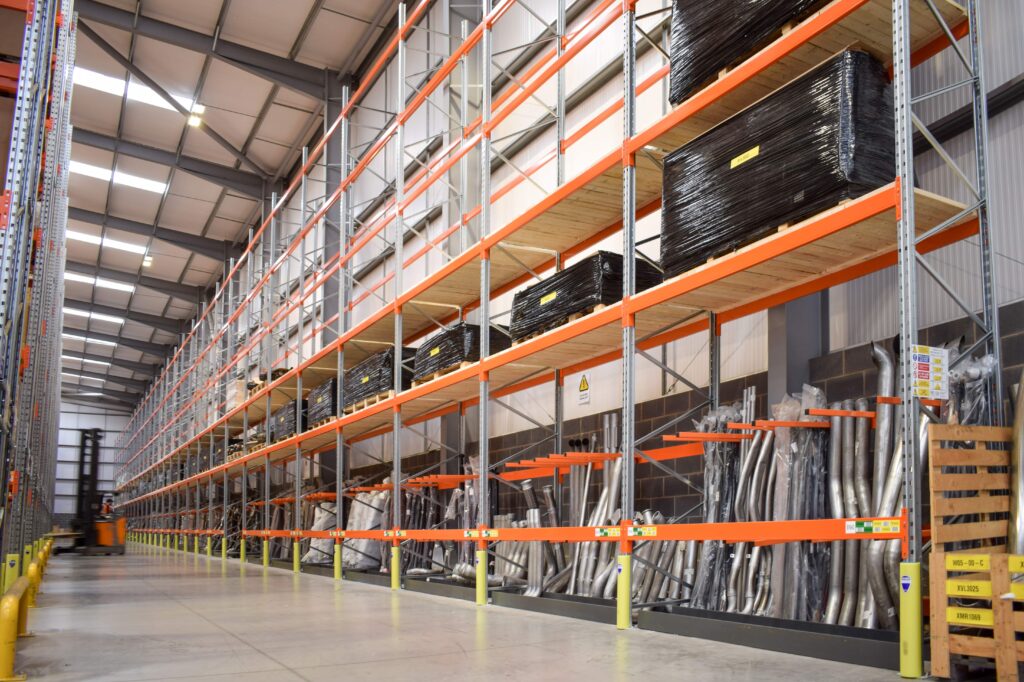
At Prodek, we understand that pallets require essential storage, which is why our expert team design sophisticated pallet racking solutions. Pallet racking allows for vertical storage that delivers rapid access for forklift trucks, maximising potential profit per square metre.
Our pallet racking systems include:
- Narrow Aisle Pallet Racking
- Double Deep Pallet Racking
- Adjustable Pallet Racking
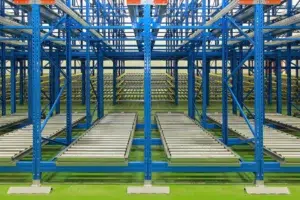
- Live Pallet Racking (FIFO)
- Drive In Pallet Racking
Pallet racking solutions generate high-density storage and rapid access systems to meet your business requirements.
Trust Prodek for Pallet Storage Requirements
Prodek’s pallet racking systems are bespoke and available in various sizes to suit your requirements and premise size. Our experienced team conducts a thorough survey of your site to find the best solution for you, ensuring your pallet racking is industry-standard compliant.
We are dedicated to delivering effective logistics with high-quality results. Pallet racking undergoes stringent quality control, subject to annual safety checks by a competent person with SEMA (Storage Equipment Manufacturers’ Association) training and certification. This is why we design storage with your productivity and safety in mind, producing SEMA-certified systems and meeting various dimensions for ISO standards.
Contact our experienced team for helpful guidance, and discover how Prodek can effectively provide pallet racking storage and more for your business.